




Global C-Sink Registry
Carbon sink standard

Global Construction C-Sink Standard.

How buildings can store carbon for the long term

About the standard

The Global Construction C-Sink Standard verifies buildings and civil engineering works that store carbon in the materials they're built from. Plants pull CO2 out of the air as they grow, so bio-based products like hemp, straw, wood, or biochar carry that captured carbon with them. Built into a structure, these materials become a carbon sink.

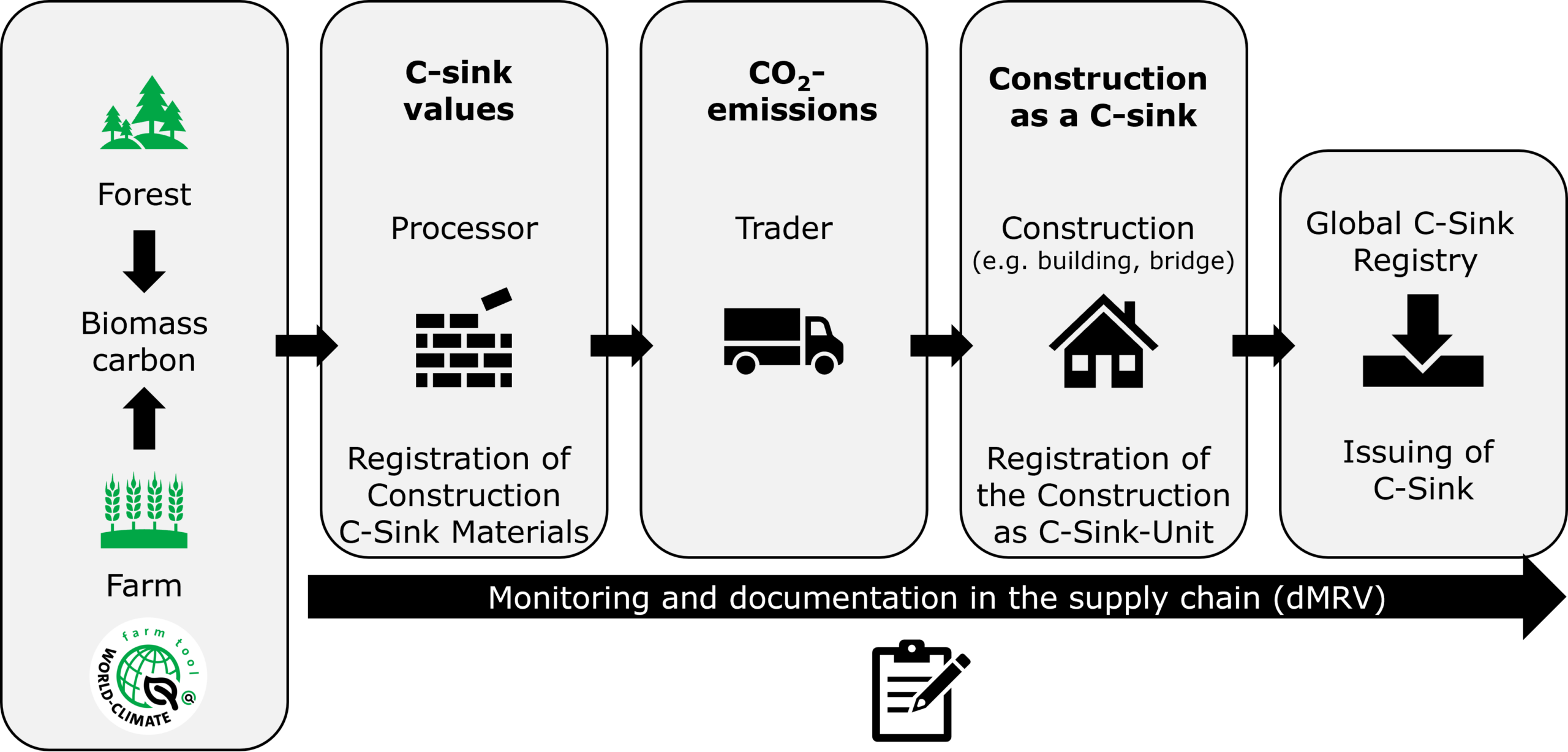
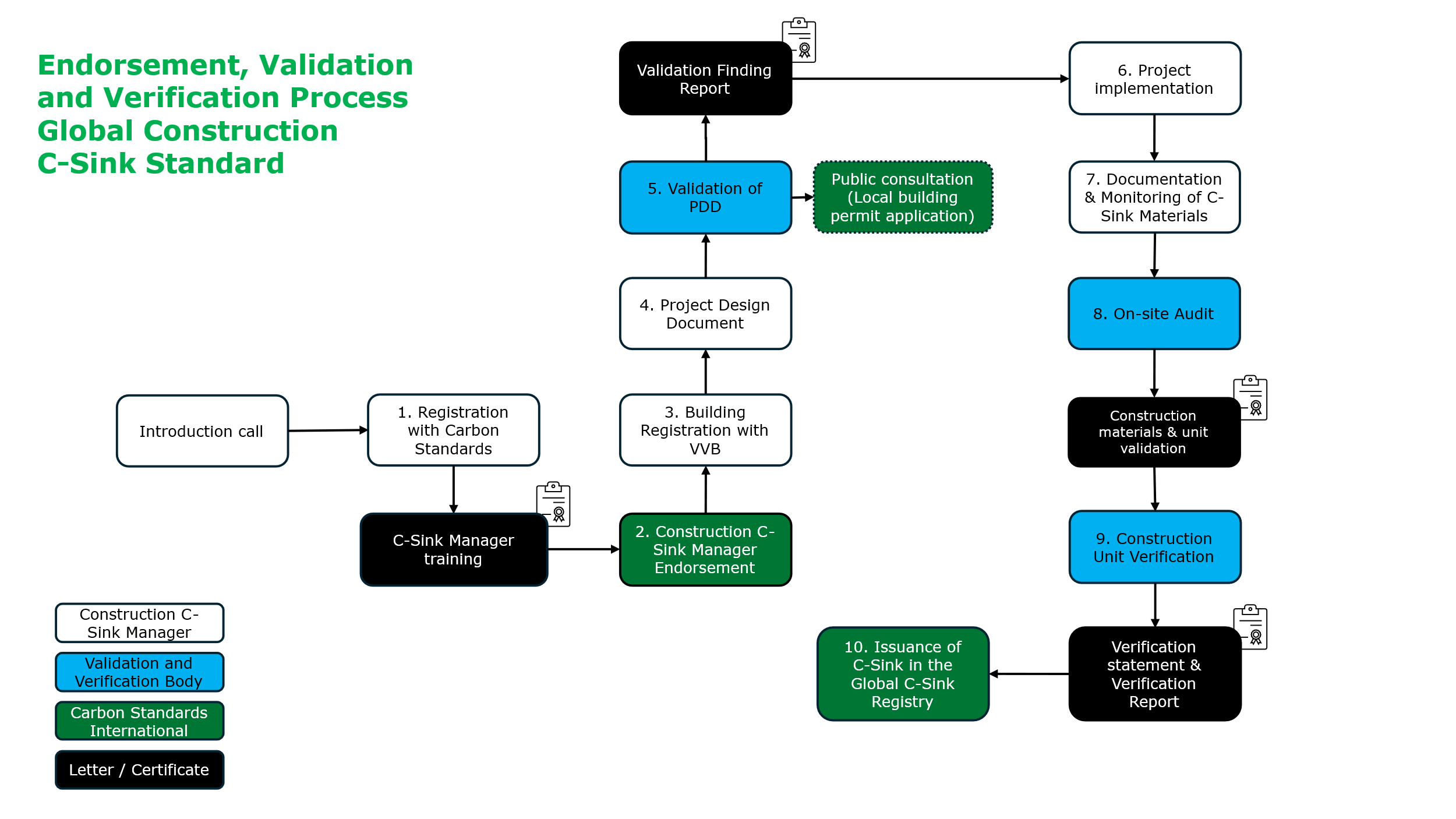
Each verified construction counts as a C-Sink Unit and can be listed in our public Global C-Sink Registry - provided all the emissions from producing and transporting its carbon-storing materials have been offset.

The standard tracks that carbon at every stage: from where the biomass is grown, through each step of processing, to the finished construction and across its lifecycle. Every unit of stored carbon is traceable through endorsed digital monitoring, reporting, and verification (dMRV) systems.

It's built around what the market actually needs:

  • Immediate impact - carbon is stored from day one
  • Scalable - available at the volumes global markets require
  • Traceable - every C-sink is precisely located and verifiable within the building
  • Durable - carbon stays stored for the lifetime of the construction, and often beyond
Gebäude Enlarge image

Standard details

Interested in Global Construction C-Sink certification?

Register your interest

Contact person

Robin Werren

PM Global Construction C-Sink

+41 (0) 62 552 10 86 robin.werren@carbon-standards.com