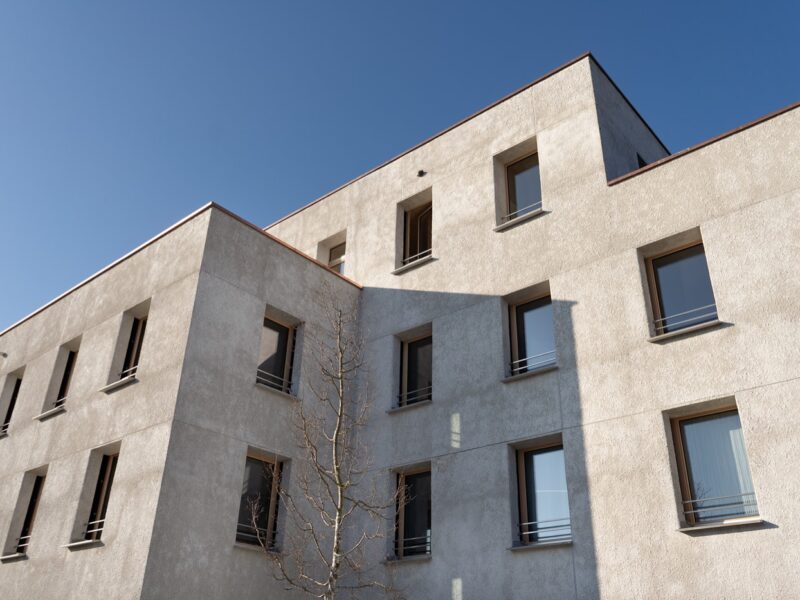
The Global Construction C-Sink Standard makes this possible by verifying buildings that store biogenic carbon long-term through materials like hemp, wood, cork, straw, cellulose and biochar. Carbon that was once in the atmosphere becomes part of the building itself - traceable, verifiable, and long-lasting.
In our latest video, Christoph Neururer and Andy Keel from OPENLY presents a real pilot project that shows what climate-friendly construction can look like today:
- Avoidance first - reducing CO₂-intensive components wherever possible
- High C-sink potential - hempcrete walls, cork & cellulose insulation, wood structures
- Innovation - reinforced concrete with biochar to bind additional carbon
- Designed for disassembly - a house seen as a future raw-material depot
- Healthy living - controlled ventilation without pipes
In the house of the pilot project about 350 m³ of hempcrete was used - hemp absorbs ~1.7 kg CO₂ per kg during just three months of growth. Stored safely in the building for decades.
With the first Global Construction C-Sink verification, OPENLY now:
- Shares knowledge through monthly trainings
- Acts as Global Construction C-Sink Manager, verifying biogenic carbon sinks in buildings worldwide
This is how construction becomes part of the climate solution - from day one.
Watch the video and imagine what our buildings could become.