In Thailand, Wongphai is building a circular model around bamboo and biochar that puts soil health at the center - connecting waste management, land restoration, carbon removal and local economic opportunity.
It starts with a material that might otherwise be considered waste: bamboo residues.
Agricultural residues can become an environmental challenge when there is no productive use for them. Open burning, in particular, contributes to greenhouse gas emissions and air pollution while also depleting soil nutrients, organic matter and the health of surrounding ecosystems.
Problem or opportunity?
What is typically seen as a problem, Wongphai saw as an opportunity. Watching how open burning affects farmers, communities, public health and biodiversity, they decided to take action at the root source.
Looking at the traditional bamboo industry value chain, they identified an opportunity to take it one step further: developing a zero-waste, circular approach through the Wongphai Waste to Wealth Model.
Instead of burning the bamboo scraps generated during pole production, the residues are collected and converted into biochar through pyrolysis. But the story doesn’t end there. The biochar is brought back to the land, where it helps restore degraded soils while storing carbon.
It is a simple cycle with multiple benefits: managing biomass residues, rebuilding soil structure, storing carbon and creating new value from materials that previously were undervalued.
Bringing degraded land back to life
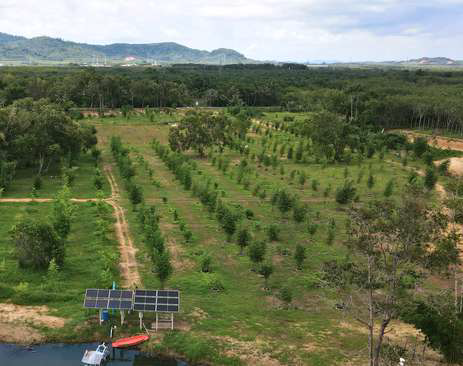
One of the clearest examples of this is Wongphai’s work on an abandoned mine site.
Biochar was applied to degraded soil before the area was further developed into a bamboo plantation. As the project progressed, Wongphai observed real changes: improved soil fertility, stronger bamboo growth and the return of earthworms beneath the biochar cover.
The transformation is visible above ground, but some of the most important changes are happening underneath it. The return of earthworms and other underground activity is a sign of a recovering soil ecosystem, supporting nutrient cycling and creating better conditions for plant growth.
Impact beyond carbon
Wongphai’s work also shows why the value of a biochar projects cannot be measured in tonnes of CO2 alone.
According to Wongphai, its activities have managed more than 20,000 tonnes of biomass waste, contributed to restoring more than 200,000 m² of land and soil health, created more than 30 local jobs, benefited over 1,000 people within its community network, and delivered more than 10,000 tCO₂e of durable carbon removal.
These outcomes connect carbon removal with something tangible: healthier soils, productive land and job opportunities for local communities.
From waste problem to soil solution
What started with a simple question - problem or solution? - became a model that connects waste management, carbon removal, soil regeneration and local value creation altogether.
By turning bamboo residues into biochar and returning that carbon to the land, Wongphai has built a circular system where waste becomes a resource, degraded soil becomes productive land, and carbon is released as long-term nutrients along the way.
The Wongphai Waste to Wealth Model shows what soil restoration through biochar carbon removal can look like in practice: a solution rooted in the local landscape, creating value for the land, the climate and the communities around it.
From bamboo residue to biochar. From degraded soil to regeneration. From a waste problem to a climate solution.