
Random Reflectance Pilot – with promising results
Carbon Standards International continues to focus on innovation.
Carbon Standards International continues to focus on innovation. Together with the Ithaka Institute and other partners, we are implementing a project in which the persistence of biochar is assessed using new scientific methods. The results are promising, as the new highest persistence class has a geological persistent carbon (GPC) content of 90%.
The scientific challenge
Ultimately, the question on everyone's mind is how much biochar carbon is stable enough to enter the geological carbon cycle. So how likely is it that the carbon will still be in the soil after 1000 years, and how can this be reliably assessed?
While many parameters can be reliably analysed in biochar, the real challenge lies in evaluating these analytical results. Please also refer to the ‘Policy Commentary on Biochar Persistence’ in which the Ithaka Institute discussed and published this issue with renowned biochar researchers.
The pilot project
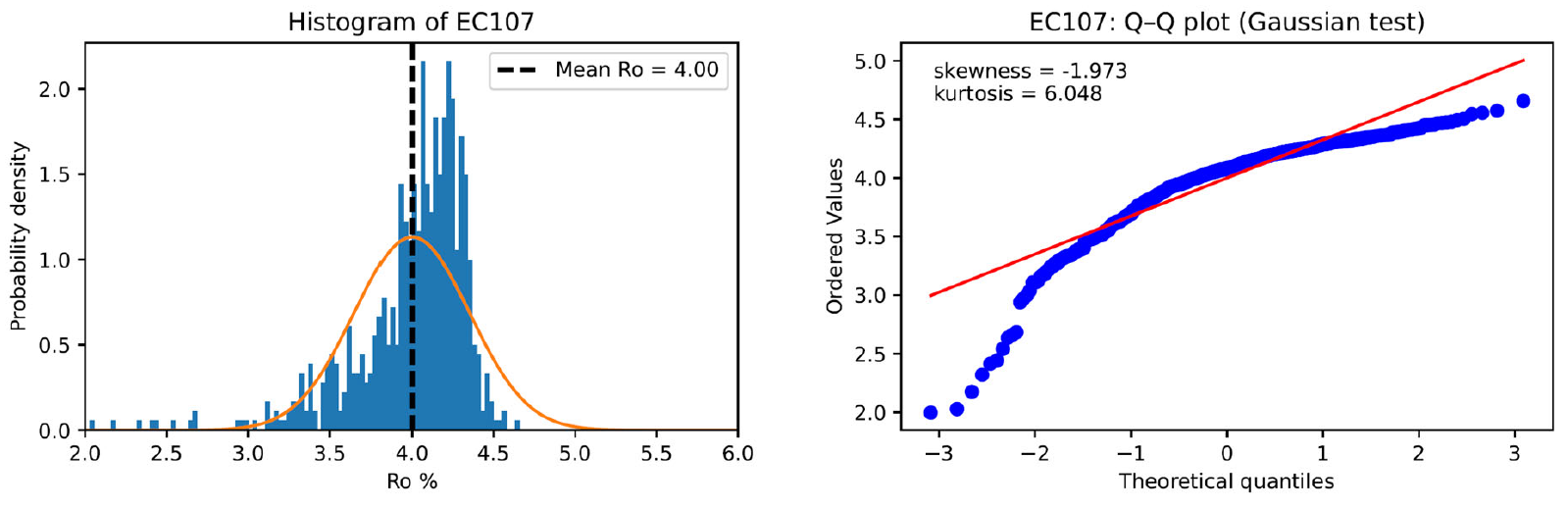
We started our pilot project in the summer of 2025 and expect it to be completed in the first quarter of 2026. The project aims to scientifically evaluate new methods for assessing the persistence of biochar and to introduce a new classification of biochar in the Biochar C-Sink Standard. To this end, we examined biochar samples using the known methods for assessing the stability of biochar and compared the results.
The results are promising, as the new highest persistence class has a geological persistent carbon (GPC) content of 90%.
The Random Reflectance (Ro) and Hydropyrolysis (HyPy) methods can be used in future to assess the persistence of biochar, with in-depth scientific evaluations providing the necessary basis for this.
Geologically persistent carbon
We are introducing the term geologically persistent carbon (GPC). The term should provide greater clarity and be easier to understand overall.
GPC refers to the assigned proportion of carbon in biochar that is highly likely to remain in the soil for more than 1,000 years after application and thus enter the geological carbon cycle.
Analytical methods
The two methods, Random Reflectance (Ro) and Hydropyrolysis (HyPy), can be used in combination with other already known EBC-based analysis parameters to reliably determine carbon pools and persistence classes.
Our accredited laboratories are ready to carry out the analyses.
Next steps
We will complete the pilot project in the coming weeks, in which the biochar will be incorporated into various matrices and C-sinks will be exhibited. The project covers a maximum of 1,000 tonnes of biochar from selected producers.
We have already developed an appendix to the Global Biochar C-Sink Standard, on the basis of which the first certification of biochar will be carried out in the project.
Take advantage of this opportunity and read up on the topic now. This appendix will be further refined for inclusion in the standard version 4.0. Following a public consultation in the first quarter of 2026, the Global Biochar C-Sink Standard version 4.0 is expected to include a new classification of persistence based on these new analytical methods.
For carbon sinks that are submitted for verification after the new standard version comes into force, persistence can be determined using the new classification.
Related documents
Policy Commentary on Biochar Persistence
The Biochar Persistence Evaluation
Global Biochar C-Sink
Annex
Comments
Nagy Barbara
Great results!
Great to see continued innovation in biochar science - especially the development of GPC as a clearer way to communicate long-term carbon stability.
Comments
Nagy Barbara
Great results!
Great to see continued innovation in biochar science - especially the development of GPC as a clearer way to communicate long-term carbon stability.